Showing posts with label Culture. Show all posts

Sunday, July 1, 2007

Gamers in the Wild

invadin ur spaceLast night, my husband and I went to the Kennedy Center to see Video Games Live, the game music concert. As I mentioned previously, Killa was unable to attend because of a work function. His history with the event is thus: He was all set to see VGL when they were touring in 2005, but they canceled their DC show (along with others) and so he didn't get to see it then. This time around, his place of business is in the middle of their busiest week of the year, so, again, he wasn't able to see it. He will have to live it vicariously through this blog post.

I feel obligated to briefly explain what Video Games Live is, because apparently this knowledge is not ubiquitous. Perhaps fifteen minutes before leaving for the show, my husband said to me: "So, is this going to be people on the stage playing video games, live? Or what?" VGL is a symphonic performance (in this case, performed by the National Symphony Orchestra and the Master Chorale of Washington) of music from various video games, accompanied by video clips from the featured games and some onstage live performance. During the pre-show they held a cosplay contest in which a young man dressed as Link beat out a couple dressed as Mario and Peach cart-racers to win a Nintendo Wii. I imagine he then went home and played Twilight Princess on it in the most Escheresque example of meta-gaming imaginable.

The show itself featured a medley of classic arcade music and the music from Super Mario Brothers, Legend of Zelda, Sonic the Hedgehog, World of Warcraft, Halo, Kingdom Hearts, Metal Gear Solid, Advent Rising, Final Fantasy, Medal of Honor, Civilization IV, God of War, Tron, and possibly others I can't remember offhand. Sid Meier himself came on stage to introduce the music from Civ IV and to announce (in what host Tommy Tallarico called a "Video Games Live exclusive") that the Civilization series would be coming to handhelds and consoles, which would have been exciting if I had not read it on Kotaku last week. Oh well.

The Metal Gear Solid segment featured a hilarious live-action skit with a man (ostensibly Snake) in the infamous cardboard box giving an armed guard the slip. My husband, having just finished God of War last week, was particularly impressed with that segment. And, even though I'm picking on Sid Meier, and though I haven't played any of his games, I thought the music from Civ IV was especially beautiful and moving.

The absolute highlight of the evening (for me) was Martin Leung, the Video Game Pianist, who made a guest appearance playing a solo piano rendition of his Final Fantasy medley. SquareEnix apparently won't let them show game footage from any of its games on the monitor during the show (boo? This was also a hindrance to the Kingdom Hearts segment, which featured footage from Disney movies only). Instead, the monitor showed Leung playing his piano for the duration, which was fine with me, as he's one of the most animated players I've ever seen. I was able to pick out "Zanarkand" from X, "Aerith's Theme" from VII, "Eyes on Me" from VIII, "One-Winged Angel" from VII, and, of course, the recurring victory fanfare and the crystal theme.

All in all, I suppose I would have liked to hear more music from Final Fantasy ("Liberi Fatali" or "Eyes on Me" are highly recognizable favorites); perhaps I should have just gone to see Dear Friends. The symphony played "One-Winged Angel" as their final encore, and the entire house went nuts. We had a wonderful time and would go again if the opportunity presents itself (hopefully, next time, with Killa and Poptart). I would encourage anyone to go see this show if you have the chance.

Wednesday, May 2, 2007

Rumor Mongering

Ever since I began writing this blog, I've managed to stay pretty up-to-date on industry news and trends by keeping abreast of the major sources of news and rumors (e.g., Penny Arcade, Kotaku, Joystiq). I know that prior to this great undertaking, I didn't have the knowledge base that I do now. If, a year ago, someone had told me something along the lines of, for example, "The next God of War game is going to come out for the XBox," I may not have seen the obvious flaws in that equation; most notably, that Sony owns the God of War IP and therefore no God of War game will be released on a Microsoft console as long as Sony is still in the business of making consoles for itself. These are the sorts of distinctions that might not be made by a layperson who doesn't spend all of their time combing gaming-related web sites and their affiliated message boards. Suffice it to say, that type of rumor will never prove to be true; it stems from misunderstanding and is primarily harmless.

Another kind of rumor, more devious, is that created or perpetuated by those with a good working knowledge of the industry and its idiosyncrasies. A good example of this would be, for instance, "Final Fantasy XIII is going to come out for the XBox 360." Since FF is developed and published by a third party company, it's entirely possible that it could come out for multiple platforms. In this iteration of the series I think it's unlikely to happen for other reasons, but it isn't a logical impossibility based on property ownership and rights management. These rumors are harder to discern, and they sometimes end up being (or becoming) true. For example, there were rumors that DMC4 would be multiplatform, and lo, so it has become.

Then there are the rumors that don't make any sense at all. I was at a baby shower (of all places) on Sunday and found myself engaged in conversation with a gentleman on the subject of the 360, Wii, and PS3. When I mentioned to him that I own a PS3, he urged me to sell it on eBay or otherwise try to recoup some of the money I spent on it. He explained to me that Sony has stopped production on the PS3 and is discontinuing the system, and, moreover, that only five games are going to be produced for the system before Sony stops supporting it entirely. Unsure of how to respond to so much incorrect information coming in at once, I simply observed: "That information is incorrect." He shrugged his shoulders and responded, "You'll see. Don't say nobody warned you six months from now when your PS3 is completely obsolete." Ouch!

Fortunately, no one will have to miss out on God of War III, because I hear it's coming out for the XBox 360.

Tuesday, April 24, 2007

Top 10, Again and Again

By now we're all used to the Top 10 [Somethings] in [Something] lists that proliferate all over the internets (e.g., Top 10 Most Clichéd Items on the Internet). Top 10 women in gaming lists are a frequent enough occurrence that there's no need for any more of them (see, e.g., yada yada). The other day, though, I was directed to a blog called ShinyShiny that apparently is in the business of explaining tech gadgets to helpless females(?). The specific article to which I was directed is a top ten list of female video-game characters you should idolise [sic x 2], which is a new enough twist on an old favorite that I was willing to give it a look.
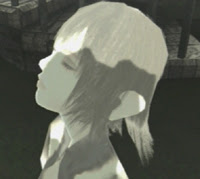
I gave up hope for the ShinyShiny list as soon as I saw Ico's Yorda at number nine. It's true that Yorda can open some doors with magic that the protagonist can not otherwise get through, as they noted. That doesn't outweigh her role in the bulk of the game, which is spent dragging her along behind you like a deadweight, literally leading her around by the hand, helping her jump across tiny gaps and coaxing her up steps, yelling at her, and defending her from shadow monsters. She's completely helpless, and, should you turn your back on her for even a moment, she'll wander off and get into some terrible predicament. I don't understand how she is worthy of idolization. Is it because she's taller than Ico? Did ShinyShiny even play Ico?

Likewise, simply having appeared in many games doesn't make a character worthy of idolization. Consider Princess Zelda of Legend of Zelda fame: She's certainly physically lovely, magically powerful, and deeply good in ever fiber of her being, but she isn't a good candidate for an idol---i.e., someone to look up to and emulate. Advising a woman to idolize Princess Zelda is advising her to play a supporting role in her own story. (For the same reason, Yuna Braska of FFX and FFX-2 didn't make my cut.) Moreover, there isn't "one" Princess Zelda to idolize; every Legend of Zelda game features a different Zelda. Is this what I should idolize? A series of women, each interchangeable with all the others? Should I aspire to be confused with anyone who happens to have the same name as me?

It's not that there's anything wrong with Princess Zelda or Princess Yorda. They're both very interesting, multifaceted characters and have appeared in some of the greatest games ever made. It's just that those qualities aren't something to be idolized or emulated by real-life women. Trying to behave like Yorda would be just as foolish and ridiculous as trying to look like Lara Croft. And anyway, not every female character has to be admirable and aspirational---just like not all male video game characters are great role models. It's just that if you're going to compile and put forth a list of female characters who are worthy of idolization, I feel like a little care should be taken to see that they have some quality that makes them worth admiring (other than having "ethereal good looks" or "great hair"), or at least that you can put forth a legitimate reason why you feel they make a good role model (see Shiny's blurb on Zelda).

Without any more complaning, here is my Top 10 List of Video Game Women You Can Actually Idolize.

10. Beauty Queen Etna (Disgaea). Etna doesn't get to be a Netherworld Demon Lord by using her feminine charms. Instead, she fights her way tooth and nail to the top and then bestows upon herself the title of Beauty Queen. Etna never asks anybody for anything; if she wants something, she goes out and gets it---often, she takes it. And she makes no apologies for her caustic sense of humor. I'm looking forward to the PSP remake of Disgaea: Hour of Darkness with an all-new Etna-based storyline branch.

9. Chun-Li (Street Fighter). "I'm the strongest woman in the world!" Of all the fighting games in all the arcades in all the world, she walks into mine. There are a lot of fighting games out there with a lot of token cheesecake characters, but Chun-Li has been there from the start; her Lightning Kick and Kikoken are iconic; and her little dance of joy when she wins---"Ha, ha, ha, Yatta!"---taught a whole generation of boys to be ashamed when they got beat by a girl.

8. Rydia (Final Fantasy IV). I didn't want to flood the list with Final Fantasy characters, so I had to be pretty choosy. Rydia isn't the most memorable FF character (maybe I'm showing my age by remembering her), but she fairly embodies personal growth. Rydia is the only FF character we see grow from a child to a young woman in the course of a game. She's also the first powerful summoner of the Final Fantasy series. Throughout the Final Fantasy games, the female characters have always tended toward the mage classes while the male characters tend to be the fighters. As a summoner, Rydia was an incredibly powerful damage dealer, blazing the trail for later summoners like Garnet and Yuna.

7. Princess Peach (Super Mario Brothers). Princess Peach evolved from Donkey Kong's Lady (aka Pauline) character, the original damsel in distress. In recent years, however, Peach has really come into her own. Sure, she still needs to be rescued every now and then, but now she does the rescuing sometimes, too (see, e.g., Super Princess Peach). She was a playable character as early as 1988 in Super Mario Brothers 2, and since then she's been holding her own in other titles like the Paper Mario series and the Mario Party series. She's also proved an able go-kart racer, tennis player, golfer, and even a basketball player. She also made an appearance as a formidable fighter in Super Smash Brothers Melee. All without breaking a nail.
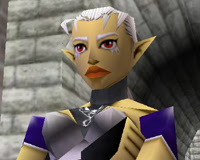
6. Impa (Legend of Zelda: The Ocarina of Time). There have been several Impas over the years; we met her first in the original Legend of Zelda and just recently we ran into one of her descendants in Twilight Princess. For my money, the most admirable Impa is the iteration found in the Ocarina of Time. As the young princess's nursemaid and bodyguard, Impa---last of the warrior race of Sheikah---whisks the child Zelda away from Hyrule Castle ahead of disaster and spends the next seven years teaching her young charge everything she needs to know so that, when the time comes, Zelda will be ready to do her part to save Hyrule. When that mission is completed she takes up her post as the Shadow Sage. Impa is both nurturing and ass-kicking, a hallmark of the wise warrior archetype.

5. Ms. Pac-Man (Ms. Pac-Man). When Ms. Pac-Man first pakku-pakku'd her way onto the arcade scene in 1981 she was a female original. The only other lady in the land was Lady from Donkey Kong, and Lady was just a damsel. Ms. Pac-Man, the first female video game protagonist of all time, could do everything that Pac-Man could do---but she was actually faster than Pac-Man and, as a bonus, she had a sassy bow and a cute mole.

4. Jill Valentine (Resident Evil). The original Zombie Stomper from Resident Evil. She could carry more stuff than Chris Redfield (maybe she had a purse?) and open doors with her lock picks, but she couldn't take as much damage as Chris. One of the most common arguments supporting uneven representation of women in video games is that "men play games, and people want to play characters that represent them." Moreover, as I learned in the MMORPG wars, when men play a female character they want a fine (and largely unclothed) female body to watch to make it interesting. Resident Evil split the difference by offering two protagonists from the start. One man, one woman; both completely capable, each with unique advantages and challenges. Jill Valentine wasn't a skinny, skanky supermodel with a couple of guns and a hankerin' for some zombie spankerin'. She really did give the impression of being a fully capable, totally badass paramilitary solider.

3. Ashelia B'nargin Dalmasca (Final Fantasy XII). The best female protagonist in an FF game in a long time (but with the worst name). Ashe is sort of an evolved form of FFIX's Garnet. More than anything, I appreciate her bringing the Final Fantasy series back around to more of an expansive epic plot and certainly more of a group dynamic than in recent games. Ashe isn't the narrator (narratrix?) of FFXII, but she is the main character and protagonist. A young widow, resistance leader, and displaced monarch, Ashe is incredibly accomplished for a nineteen-year-old. She's not afraid to indulge her emotions, but she knows when to move beyond them.
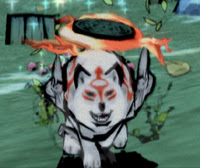
2. Amaterasu Okami (Okami). When the sun goddess Amaterasu has to come down to Earth, she doesn't choose to come in the form of a scantily clad bimbo, but in that of the legendary white wolf Shiranui. Her mission is purely benevolent: Armed only with a celestial paintbrush, to restore all the color of the world and drive out an unnatural darkness. Apparently, she is also endowed with infinite patience (I would never have been able to put up with Issun).
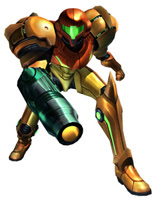
1. Samus Aran (Metroid). We spent the whole game of Metroid thinking Samus was a dude. Why? Because she was clad head to toe in her power suit and it didn't have built-in breasts or a tiny cinched waist; because the instruction manual referred to Samus as "he"; but mostly because we had never seen a female character in a video game before who wasn't sitting around waiting to be rescued, and we certainly didn't see them flying around space shooting brains with their totally awesome ray guns. Only Ms. Pac-Man approaches Samus's early protagonist status, and never forget that Ms. Pac-Man was just having a snack; Samus Aran was saving the whole galaxy.


Honorable Mentions
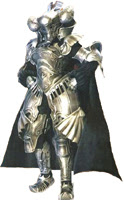
---Judge Magister Drace (FFXII). I would have given Drace a spot in the main list, but her appearance in FFXII is so brief. Drace is the only female among the Judge Magisters of the Archadean Empire and the champion of the youthful Prince Larsa. Drace is a decent person first and a judge second, and she proves herself when she attempts to arrest her corrupt monarch, even knowing that the futile effort will cost her life.

---Mama (Cooking Mama). No, she's not saying "You're not mine!" when you mess up. She's saying "Do not mind!" Mama doesn't want you to feel bad when you burn the toast or drop the eggs on the floor. She just wants to spend time with her kids, doing something fun and educational (cooking). It's too bad more mamas aren't like her.

Thursday, March 15, 2007

For Every Samus

(There is an Equal and Opposite Lara)

"Why aren't there more female gaming bloggers?" asks Kotaku's Brian Crecente. It's a good question and I'm glad somebody has asked it "aloud." Why are they so hard to find? The fact is that we're looking for individuals with three crucial characteristics, each harder to find than the one before.

The community of women is not small; the community of gamers is smaller than that, but still by no means small; finally, the community of writers falls somewhere in between, depending on how you define a "writer." We're looking for a person who is all three of these things in one person, so we have to ask ourselves: "Where is the stumbling block?" I have no doubt that there are plenty of writers who are women. I know that there is no shortage of gamers who are writers. If we accept both of these premises as true, then we must conclude that the choke point is women who are also gamers.

To get to the root cause of this, we must puzzle out why the community of female gamers is not proportionate in size to the community of male gamers. By way of a disclaimer, I don't purport to be an anthropologist, sociologist, psychologist, or ethnographer, so I can't make these claims with any sort of academic authority. All I have is my own perception.

Is it that women as a demographic are ambivalent toward video games in the same way that they are ambivalent toward sports? I think this is a possibility that accounts for some women---it's possible that a greater proportion of women than men just aren't interested in games---but we're comparing apples and oranges. On the one hand, sports and video games are both forms of entertainment, and in that sense it's fair to say that some women in general may simply be uninterested in these forms of entertainment. On the other hand, video games are a type of media. To say that games aren't interesting to women is akin to saying that television, radio, or books aren't of interest to women (or men, or any other demographic).

Is it that there is a stigma attached to playing video games? For an adult woman---in my experience, yes. When I told one colleague at my place of employment that I enjoy playing video games, she responded: "Really? You don't look like that kind of person." Another response I have received from another coworker is: "At your age?" The other day I received a phone call in the evening from a colleague who knows that I work a full-time job, plus a part-time job, on top of caring for a husband, a home, a dog, and this blog. Instead of asking what I was up to that evening, she simply said: "You're probably playing your video games."

The perception that gaming is the province of adolescent boys leads to the assumption among the misinformed that an adult man who is a gamer simply has not grown out of a boyish habit, whereas an adult woman who is a gamer is doing something that is not only age inappropriate, but also gender inappropriate. When pressed, non-gaming colleagues have told me they feel that gaming is a waste of time, or that it is a lot of time to spend on something that has no lasting results and leads to no measurable gain. For some reason, though, these same people don't feel that watching Lost or Ugly Betty on television, browsing YouTube on the computer, or spending an evening at a nightclub are profitless wastes of time.

Is it also possible that there is negativity toward women within the male gaming community? Yes. Although it's much more comfortable to direct the blame outside of the gaming community that I love, the fact is that male gamers engage in hostility toward female gamers, often without even realizing they are doing so.

"It's up to you [women] to help change perceptions, because god knows we've had enough Barbie Adventures for a lifetime," Crecente writes, but there's a major logic flaw in his plea. It won't help for women gamers to come forward and tell the world that we're sick of Barbie Adventures. The perception problem here is that people---even people who are seriously in the know---assume that games like Barbie ____ Adventures are being made for and marketed to women when they are in fact being made for and marketed to children. Nora Helmer, do you hear this? Is it possible that confusing these two demographics might be part of the reason adult women are steering clear?

In high school, I took a co-ed gym class (scandalous!) that did weight training on Tuesdays and Thursdays, and free exercise on Mondays, Wednesdays, and Fridays. On the first Monday of class, the coach tossed a basketball into the center of the gym and said: "Today is free exercise. Boys, play basketball. Girls, sit in the bleachers and gossip." (This is absolutely a true account.) I sort of feel the same way about the welcome women gamers receive from gentleman gamers: "Boys, play Halo. Girls, play Barbie's Latest Adventure."

Friday, March 2, 2007

While We Were Sleeping

(Breaking News: Sony To Take Ball, Go Home.)

It was a dark and stormy night, and I was out like a light, sleeping the sleep of the chronically afflicted. I have this cold from November through March, every year. As soon as the weather warms up, and I get some sun, and the sniffles finally disperse, it will be allergy season.

Somewhere in the gathering darkness Killa, too, was sleeping, dreaming his headshot dreams. Suddenly, a shot rang out! A door slammed! The maid screamed! Suddenly, PR snafu appeared on the horizon.

In an interview on Wednesday, February 28, the GDC executive director (Jamil Moledina) told the media that (SCEI executive) Phil Harrison's keynote speech at GDC next week would leave PS3 owners "very happy." I didn't pay too much attention to this at the time; I'm enjoying my PS3. I'd be "very happy" with a FFXIII demo, but that would be SE news, not SCEI news. Well whatever. I filed it away in my brain for future reference. Although prompted for further information, Moledina was rightly reticent.

Yesterday, March 1, Kotaku.com editors Brian Crecente and Michael McWhertor ran a rumor that the highly anticipated announcement Phil Harrison would be making on March 7 was to be the unveiling of PlayStation Home, Sony's take on XBox Live and Nintendo's Mii channel---a virtual space where PS3 players can house an avatar and display their gaming achievments (sort of like one's house in Animal Crossing, I have heard it said). When they tried to verify the story with Sony, Crecente and McWhertor were asked not to publish the story, then threatened with ominous consequences if they ran it, which they did anyway. Kotaku and Sony seem to have since made up, but not quickly enough to keep diehard Sony fanboys Tycho and Gabe over at PA from commenting on the events.

Let this be a lesson to anyone who is in the field of, or considering going into, public relations. The news media and the blogging community are not part of your PR machine. It is the job of your PR department to keep news under wraps until it is advantageous for you to reveal it, while generating as much excitement about it as possible. SCEI and GDC representatives did this by leaking teaser tidbits about Harrison's keynotes. That was the correct thing for them to do. It is then the job of the news media and the blogging community to disseminate information when they have it. It is ludicrous for Sony to expect Kotaku to hold their information for them, and the implication that Crecente and McWhertor were somehow behaving unethically or discourteously is equally ludicrous.

If Sony hadn't made such a big fuss over this, it would have remained a rumor. The gaming community would have speculated about it over the next week and then, come March 7, Phil Harrison could have made his keynote as planned with even more buzz than before, because Kotaku's readers would have all tuned in to find out if the rumors were true.

Instead, Sony essentially confirmed the story by vehemently insisting that Kotaku sit on the rumor. If Sony had simply said to Kotaku, "Hey, we wish you wouldn't run this," the story would have run as a rumor and that's it. But the PR explosion serves the dual purpose of convincing everyone who heard it that A) the information is true, and B) the Sony PR machine is a big jerk. Had Sony let the story run as a rumor and held back any comments, it would have turned out pretty well for them, I think. It's unfortunate that Sony's judgement was so poor in this case; they really need all the good PR they can get.

They had learned about public relations, but more importantly, they had learned something about life.

Monday, February 19, 2007

Bid Me Discourse, I Will Enchant Thine . . . Arm?

(One Step Forward, Two Steps Back)

The crux of the issue is that I really want to know the street date for Enchanted Arms for the PS3, but I’m afraid to ask. The two main reasons (for my fear) are: First, that I don’t want to hear any PS3 jokes; and, second, neither do I want to hear any Enchanted Arms jokes. I’m a fan of JRPGs, so when reviews arise that advise against purchasing a game based on the fact that the game in question---itself in fact a JRPG---exhibits characteristics suspiciously like those found in a---wait for it!---JRPG, I may somehow not be warned off buying it. But I don’t fancy getting into this conversation with the clerk at EBStop, so I am loathe to call them up and enquire about the street date. Wikipedia says March 13. Gamestop.com says March 27. Ubisoft is only confirming March, 2007. I averaged the two street dates and came up with March 20, which is good enough for the moment.

The street date for Enchanted Arms isn’t really the crux of the issue, however. That was all just a clever ruse. Apparently the game is a piece---I still want to/intend to give it a try, but, to be fair, I hear it’s really terrible. I checked out some comments on the web from players of the previously released X-Box 360 version, and I must say there was an almost palpable sense of displeasure wafting up from the forums. Complaints cover the whole spectrum: People just don’t like the gameplay; the graphics aren’t very good for "next gen"; the voice acting is terrible; the plot is lame; the encounter rate is uneven and generally engineered badly; the battle mechanics are troublesome; the list goes on, and on, and on.

Dude looks like a lady.What I did not find on the list was any complaint about the fact that one of the main party characters in Enchanted Arms, Makoto, is a flamboyant transvestite and homosexual. In a demographic primarily populated by males aged 14 to 35 (my approximation), and specifically by the subgroup (X-Box 360 owners) that enjoys games based on shooting every living thing that isn’t from the same country/planet as them, I was pleasantly surprised to find such a complete and utter lack of bigotry in terms of this game.

Congratulations, gaming industry, for your sensitivity! Kudos to you, Ubisoft, for your inclusive sexual politics! I think we should all be very proud of ourselves. Although gaming is often maligned as a catalyst for violence and a hotbed of unfortunate stereotypes, you must admit that the industry has a long and illustrious history of tolerance for transvestism in its products.

Lady looks like a dude.Perhaps the most famous and most inspiring instance is Princess Zelda’s male alter ego, Sheik, from The Ocarina of Time. After narrowly escaping Ganondorf’s clutches as a young child, Zelda spends the next seven years, while Link is frozen in the Temple of Time, studying the arts of war under her tutor and bodyguard, Impa. She then returns to Hyrule disguised as (or magically transformed into?) a man in order to aid Link in the battle against Ganondorf and his evil influence. A major theme of The Legend of Zelda series is that of disguising and/or discovering one’s true nature. Even as The Ocarina of Time begins, Link learns that he is actually a Hylian after having been raised as a Kokiri for his whole life. So it is, too, with Zelda, one of the most archetypically feminine characters in the entire genre, who must discover her untapped potential as a warrior in order to save her kingdom after having been raised as a pampered princess for her whole life.

This is one of the oldest plot devices in the history of the book: In order to accomplish her goal, a woman must disguise herself as a man. We don't even bat an eye at this, because we all know that the heroine won't be able to accomplish anything if everyone knows she's a woman. Eventually, inevitably, her hair and breasts will come tumbling out of their hiding places and the male lead will fall in love on the spot, ending the lady's cross-dressing career forever. Shakespeare did it. Tolkien, too. Even Disney has tapped this one without raising any eyebrows.

For some reason, though, it's a completely different story when it's a man dressing as a woman.

Dude looks like a yoshi.As early as 1988, when Nintendo rolled out Super Mario Bros. 2 (arguably one of the weirdest games of all time), they were already on the path to equal representation for sexual minorities. One of the first boss fights was versus Birdo, a pink dinosaur-bird-thing that hopped around like mad and spat eggs at you. The instruction manual had this to say of him: "He thinks he is a girl and he spits eggs from his mouth. He'd rather be called 'Birdetta.'" Later documentation insists that Birdo has always been a girl.

This backpedaling would be distasteful enough if Nintendo were trying to conceal a cross-dresser in the otherwise irreproachable Super Mario Brothers family, but the truth is actually worse. Although at the time---I was seven?---I didn't find anything particularly strange or funny about Birdo, I now suspect that s/he was intended to be a joke---ala, that guy who wants so badly to be a woman that he's quite literally got eggs spewing out of him. In order to defeat Birdo, the player is tasked with catching the eggs in midair and hurling them back at Birdo until s/he is knocked unconscious, dropping the key to the next level. (I don't think that metaphor needs any explanation.)

Which brings me back to the case of Enchanted Arms, in a sort of roundabout way. What I mean to point out is that it’s hardly revolutionary to feature a transvestite in a video game. (Much more revolutionary is that Makoto is also gay, which doesn’t seem to have been the case with Sheik, or even at issue with Birdo.) Ubisoft, you don't score any points for being on the cutting edge of youth subculture. It's been done before. What would have scored some points, and been truly revolutionary, would have been to include a transvestite or homosexual character who isn't a running joke, as Makoto appears to be. From Ubisoft's website:


Atsuma and Toya's classmate at Enchant University. Atsuma and Toya are his best friends. Makoto is openly gay and his friends like to call him the "yellow otomegokoro."* He is blindly in love with Toya and centers all of his actions and thoughts around Toya. Makoto has a confrontational attitude with Atsuma because he is jealous of Atsuma and Toya's close friendship.

* According to this dictionary, "otomegokoro" seems to translate to "girl's feeling, maiden's mind."

I was proud to see people in the gaming community refraining from making fun of this character, even when Ubisoft appears to have set him up as comic relief, in favor of making fun of more concrete aspects of the game, like the gameplay. Ubisoft's brief description of him defines him only in terms of his relationship to his "best friends," Toya and Atsuma, who call him names. I wonder if they also throw eggs at him? I'll have to play the game for myself to really assess the situation, but you have to admit, on the surface at least, it looks pretty bad.

Therefore, in conclusion: If you know the street date for Enchanted Arms PS3, can you please leave a message in the comments? kthxbye

Sunday, January 14, 2007

RE: Slamdance Festival

I've been following this story for a while now, but when it finally popped up on MSNBC on Friday I was a little surprised. I knew this was a big issue in the gaming community, but I didn't think it would get attention from non-gamers.

In a nutshell: Super Columbine Massacre Role Playing Game! (SCMRPG!) has been pulled from Slamdance by festival president Peter Baxter. Subsequently, several finalists, including FlOw and Braid, have withdrawn from the competition in protest, and sponsor USC has withdrawn its support for the festival as well.

I could link to 1Up, Kotaku, Joystiq, and GamaSutra---all of which are covering this story---ad nauseum, but I'm sure we've all seen those articles already. Here, instead, is a selection of news articles from primarily non-gaming news sources, including the MSNBC item, to sample the coverage this is getting outside of the gaming demographic.

Game On, the Newsweek/MSNBC article.

Columbine Game's Ouster Brings Response, from the Rocky Mountain News. Caveat lector: This appears to have been written by Crescente from Kotaku.

Slamdance Sponsor Pulls out over Game, from the Salt Lake Tribune.

Super Columbine Massacre Removed from Indie Game Finalists List, from the Guardian Unlimited---might be a gaming blog, but looks like it's affiliated with a mainstream news source. Cheerio, toodle pip---coverage from the other side of the pond, guv'ner.

Slamdance Is Slammed over Game, from the Desert Morning News.

Festival Pulls "Columbine" Video Game, from the Denver Post.

Unsurprisingly, the Denver Post seems to be the most antagonistic, opening the article with a citation of Peter Baxter's "sense of moral obligation," reminding readers that SCMRPG! made PC World's list of the worst games of all time, and trimming SCMRPG! creator Danny Ledonne's comments on the controversy down to the most inane snippet. By and large, though, I was pleasantly surprised to see that all of the articles (including the Denver Post) were professionally neutral on this touchy subject.

As I was compiling these links (on Friday), a non-gaming colleague of mine came by and, seeing the headlines emblazoned on my computer screen, commented that she'd been following the story as well and offered her own insights on the controversy.

Saturday, January 6, 2007

Game Boy Murders Child

Smells Like Fox News at Eleven

In a stunning example of overly sensational (i.e., poor) journalism, The Sun, a UK-based newspaper, reported yesterday on the death of a seven-year-old British child who was vacationing in Phuket, Thailand, when he plugged his Christmas Game Boy into a wall socket while allegedly still wet from being in the pool. The full story can be found here.

The sensational part isn't the article itself. The article is fair about pointing out that the hotel's electrical system is more likely to blame than the Game Boy; that the authorities are calling this a tragic accident and attaching no blame; and that the child was both (allegedly) wet from playing in the pool and (assuredly) unsupervised at the time of his death.

The problem is the headline: Connor, 7, killed by Gameboy.

When a child dies of an electric shock (or any other common household hazard, like ingesting toxic cleaning chemicals or drowning in a swimming pool) it's a tragedy. It's not front page news. But if a Gameboy killed that child, that's a juicy story. Jack Thompson is probably salivating all over this as I write.

The Sun article is clearly biased against Nintendo. They fail to mention that this child's death could just as easily been caused by a Sony PSP. Or a deadly, deadly piece of Oneida silverware. But the media is so intent on sensationalizing the "dangers" of video games that this story must have seemed heaven sent. Usually newsmongers only get to report on video games inciting children to kill one another. When the video game actually killed the child, it's a whole brave new world of opportunity for agitating widespread panic in the nongaming public. Mothers, don't let your children grow up to be gamers.

Meanwhile, gamers everywhere should try to ignore the media circus and focus on the tragic fact that a promising young gamer has been taken from among us long before his time.

Monday, December 11, 2006

So Easy, Even a Child Could Play It


Just a quick post to remind anyone who might be reading this blog about Penny Arcade's annual Child's Play charity drive.

The hospitals still have plenty of items on their wish lists---and they're not all expensive. If you can't afford a console or a video game, consider adding a board game or a DVD to your shopping cart next time you're at Amazon.com. Or, think of the non-reusable items that children's hospitals go through on a regular basis: batteries, playdough, coloring books, etc. Or, you can buy this stylish Child's Play T-Shirt at ThinkGeek.com to support the cause and advertise it, which we know today as multitasking.

Gamers get such a bad reputation for being self-absorbed, immature, violent, apathetic, alien-killing people. Except for the alien killing, these stereotypes are (often) not true---and this is the way to prove it. For any non-gamers reading this---if you've ever accused anyone of using video games to escape from reality, please consider that no one needs to escape from reality more than critically sick kids.

Friday, December 1, 2006

Work Sucks!

Today was a terrible day at work. All day I was dealing with a series of blunders on a particular project and every time I corrected one, another would pop up. Two o'clock found me in my boss's office complaining about the phenomenon, when, to my absolute mortification, I got a little emotional and let my distress show (it was a very bad day). This has me feeling a bit like Super Princess Peach who---let's be honest now---isn't very super. There's something inherently distasteful in the concept of propelling Peach through her own titular game by toying with her emotions (e.g., get her crying and she can run with super speed; make her angry and she becomes invincible, leaving earthquakes in her wake).


Anyway, the problem with my job is that it's just a normal job. It's not an awesome video game job. No, I don't mean a job in the video game industry, I mean a job in a video game. If you think about it, video games almost always depict characters going about their work-a-day jobs. It's just that their jobs are so interesting and exciting that when we come home from our nine-to-fives (or, in Killa's case, our midnight-to-fives) we can't wait to shed our own workday woes and get into theirs. Some great examples of this are the NES classic Paperboy (self-explanatory) and the new Atlus series Trauma Center, in which you play as a doctor and perform surgery on patients (no word yet on a proctology expansion).


So what are some of the greatest jobs in video games? Off the top of my head. . . .


Intergalactic Bounty Hunter. In the employ of the Galactic Federation, fly around the known galaxy in your Gunship hunting Space Pirates and those pesky Metroids. The hours are long, but you get to unwind at the end of a tough mission by taking off your Power Suit and shocking spectators by parading around in your Zero Suit (like a birthday suit, but blue). Samus Aran, pictured left, is a very famous and sucessful bounty hunter, having appeared in a number of Metroid games and all three Super Smash Bros. installments. She has the distinction of being one of the very first female protagonists in video game history, although I can't say that's terribly impressive since by the time the original Metroid takes place in 20X5, we would hope women's lib should have made some advancements. . . .

Freelance Demon Slayer. This isn't a job for everyone; superhuman speed, strength, and agility are pretty much prerequisite. Being the offspring of a legendary Dark Knight and a mortal is a definite plus. And without a Demon Trigger, you won't stand a chance. Pictured right is Dante of Devil May Cry fame, Demon Slayer extraordinaire. The successful candidate will be expected to utilize a wide variety of fighting styles to vanquish demons and other supernatural phenomena. Mustn't be at all squeamish---the weapons of fallen foes are prime pickins for the aspiring Demon Slayer. A sense of style is absolutely mandatory, as points are amassed not only for killing legions of demons, but for doing it in an attractive manner. Suggest honing skills with gun, sword, and trench coat.


Globetrotting Archaeologist. Easily one of the most glamorous occupations in this gaming life, this archaeological adventurer---a sort of tomb raider, if you will---can expect no end of action-packed excursions to exotic locations such as Peru, Egypt, and even Atlantis! A degree in the social sciences won't help you land this dream job: Come prepared with an inherited fortune, an infinite amount of leisure time, your own private airplane, and a very large brassiere. Must be willing to rob graves. Bonus: Fellow globetrotting golden girl Angelina Jolie may be tapped to portray you on the silver screen.

Plumber. Not every job in the video game galaxy is glamorous. Sometimes you just have to roll up your bright red sleeves, hitch up your trademark overalls, and climb down a slimy pipe into a brave new world of . . . fungi? But a plumber's gotta do what a plumber's gotta do---and if the job involves stomping mushroom men, spitting fireballs, and bopping your way to victory, then Mario's going to do it. That's why plumbers make the big bucks. Of course, plumbing isn't Mario's only job. In his long and esteemed career, he's also been a professional golfer, race car driver, soccer player, doctor, tennis player, boxing referee, and many, many other things. I have to say, I'm not sure how he'll feel when he finally vanquishes the evil turtle king, only to be told: "I'm sorry, but your Super Princess Peach got manically happy and flew out of the castle in a whirlwind of emotion."


Midgar Flower Girl. It's not easy to make your living selling flowers in a city where nothing can grow, but Aeris Gainsborough (left) makes this humble occupation look good. In the middle of the semi-subterranean Midgar slums, the Midgar Flower Girl will be expected to lovingly tend the only patch of grass and few flowers in the city; working conditions in the abandoned slum church are substandard; and avoiding Turk attacks and kidnapping attempts by the omnipresent Shin-Ra Corp. demand a quick-witted, independent individual. Endless optimism is a must, even in the darkest places and direst times. Are you interested? Because there's a vacancy.